We have been working since 2008
and provide high-quality services
5
Rating based on
reviews from our
customers
Daily from 8:00 to 20:00
We have been working since 2008
and provide high-quality services
5
Rating based on
reviews from our
customers
Daily from 8:00 to 20:00
.jpg)
Many people dream of having a house on the shore of a natural reservoir. However, the presence of even a small pond next to the land plot significantly complicates the task of building a house. Also, in such situations, it is usually necessary to build a pier. It is important to pay attention to creating a frame for the decking of the pier. You can contact the company LLC "RBK ALBA" for help in this matter, which provides a variety of services for repairs and construction of piers in a turnkey format.
.jpg)
The manufacture of piers involves the creation of a solid foundation. Thanks to it, the decking for the pier is held. The most popular raw materials for production are:
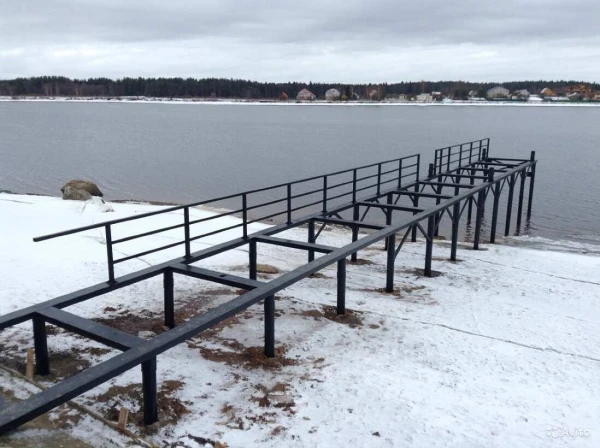
From the point of view of the type of structure, it is worth highlighting the stationary and pontoon pier frame. The frame of a stationary pier is installed on piles that are screwed or driven into the bottom of the reservoir. This option is best suited for shallow depths and a hard bottom.
Pontoon or floating format involves fixing the metal structure for the moorings to hermetic barrels or buoyancy modules. The frame of the floating mooring is recommended for reservoirs where there are sharp drops in water level.
.jpg)
The service is performed in several stages. At the beginning, an engineer arrives at the site to determine the condition of the reservoir, its bottom and other factors. Then, custom-made mooring frames provide for the following execution algorithm:
Finally, the moorings are installed using the method of reliable fastening of the base.
.jpg)
The most commonly used material for the construction of custom-made pier frames is metal, as it withstands heavy loads perfectly. However, metal frames must be periodically treated against corrosion so that they can last as long as possible. Experts conditionally divide the entire process of installing piers into two large stages:
Steel with anti-corrosion metal treatment is used to manufacture piles. The diameter of the elements should be within 76-108 mm. They must be immersed to the depth of soil freezing. The frame is tied with a profile pipe with a wall thickness of at least 3-4 mm. Metal covers are used to connect the frame components, which are welded to the piles.
Pegs, on which a rope is stretched, help to determine the boundaries of the future metal pier. Piles are driven into the bottom manually or with a motor drill. The step between them is usually 1.5-2 meters. The following actions include:
Finally, wooden or composite pier boards are attached to the metal frame.