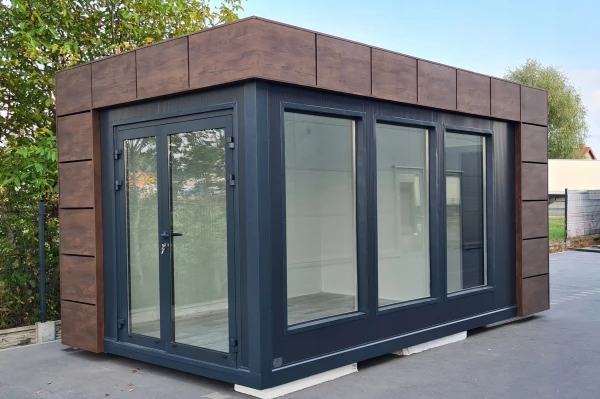
Shops, shopping pavilions
.jpg)
Small architectural forms are a good solution for organizing fast-paced retail, street food outlets or service sectors in crowded places. A large number of small and medium-sized businesses choose turnkey retail pavilions, as they ensure quick start-up of the facility, mobility and savings in financial resources on land purchase. The company LLC "RBK ALBA" is engaged in the manufacture and installation of shops and retail pavilions, offering a large list of facilities.
Manufacturing of trade pavilions: their main characteristics
.jpg)
The construction of trade pavilions is carried out on the basis of a metal frame - most often from lightweight LSTK. The installation of trade pavilions does not require a massive foundation and, if necessary, can be quickly dismantled and moved to a new location. During the manufacture of metal trade pavilions, the following characteristic features are necessarily taken into account:
- the frame base of street trade pavilions - from galvanized profiles, which guarantee high geometric accuracy and strength;
- convenient dimensions of pavilions for trade - the size of the structures ranges from 10 to 300 square meters;
- modern facades of pavilions for the store - outside the trade kiosks are sheathed with aluminum composite, glass, corrugated board, sandwich panels, etc.;
- high heat and noise insulation indicators - metal kiosks can be used in summer and winter;
- availability of all necessary communications – in the kiosks on order there is electricity, ventilation, heating, water supply, air conditioning, internet, security system.
Externally, any MAFs for trade can be easily adjusted to corporate needs, decorated in the desired color, advertising, lighting, display cases, signs can be installed on them.
Custom-made shopping pavilions: main types
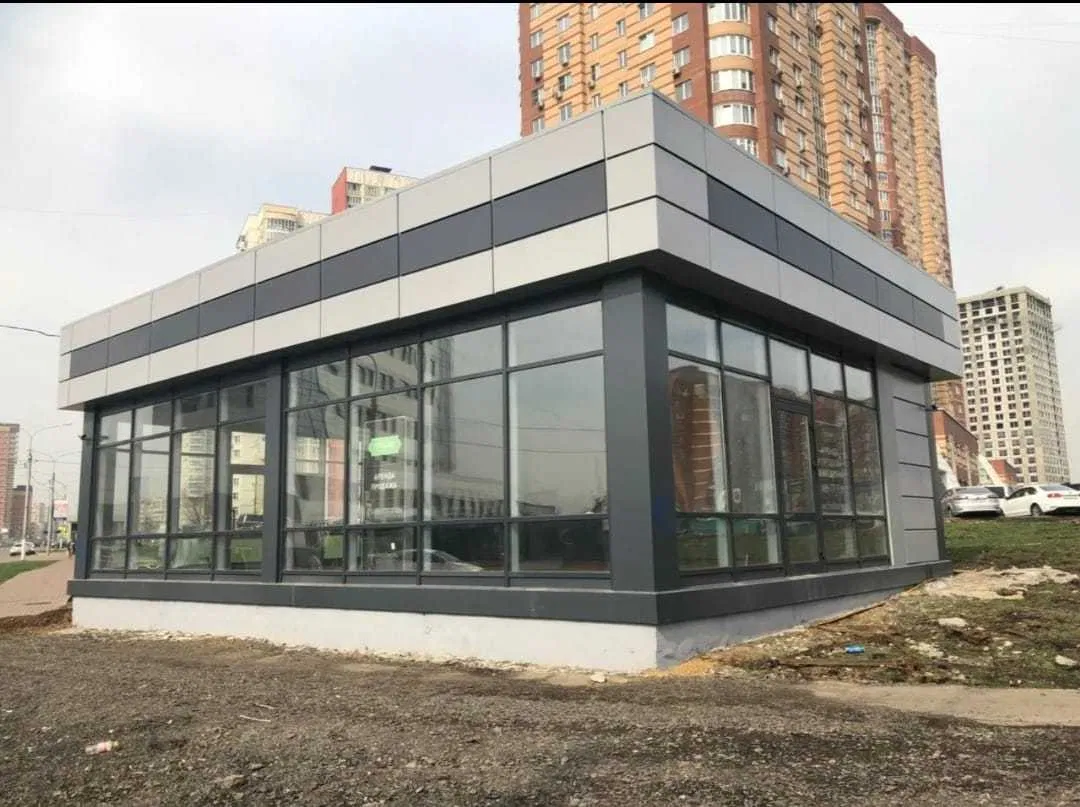
Modern modular shopping pavilions are characterized by their versatility, providing the potential for use in any industry. In general, quickly assembled pavilions can be conditionally divided into several categories:
- Household and grocery. Such modular stores are the most common, representing small pavilions for trading various types of goods. Their area is divided into a trading floor and utility rooms when installing shopping pavilions.
- Catering facilities. An ideal combination of compactness and functionality, as they allow for the arrangement of a kitchen and a visitor service area.
- Service metal shopping pavilions. Buildings from the service sector category - ateliers, beauty salons, travel and insurance agencies, offices, etc.
- Car pavilions. They are distinguished by a super-strong metal frame of the pavilion, may have wide gates, inspection pits, lifts.
- Temporary metal shops. Mobile-type structures, popular at markets, fairs, in park areas, etc. They have a lightweight frame of a shopping pavilion, are installed without a foundation, are easy to assemble and disassemble. Other types of shops and shopping pavilions are exhibition and demonstration, commercial and office, and structures for markets and complexes.
How are trade pavilions installed?
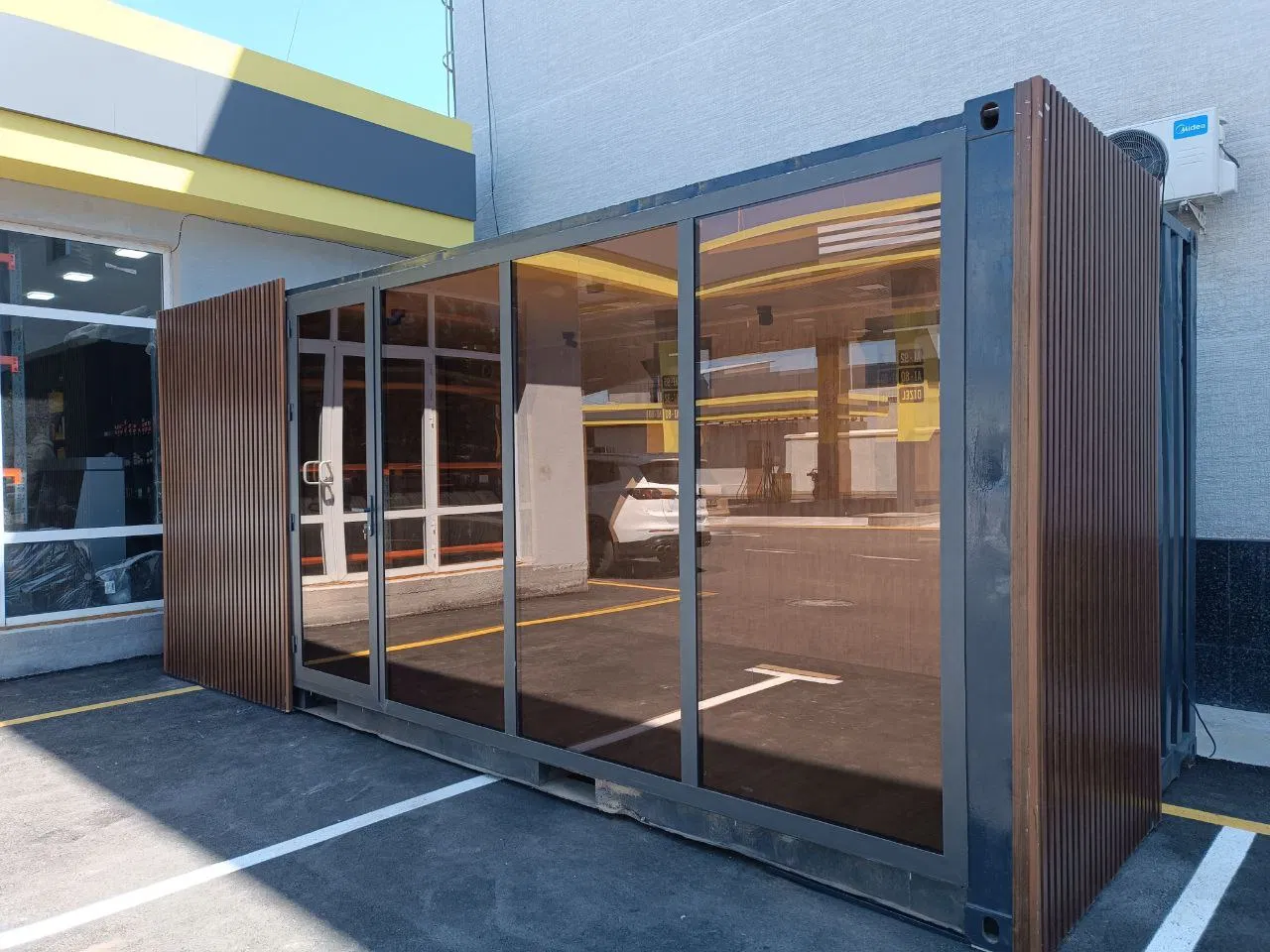
The main stages of store installation have a certain sequence and are carried out as follows:
- Design. Engineers develop a plan taking into account the purpose of the facility and the customer's requests.
- Construction. All elements of the pavilion made of metal are made with geometric accuracy.
- Foundation preparation. Depending on the design features of the custom-made stores, a certain type of base is selected.
- Frame assembly. This part of the building is usually mounted directly on the site without the use of heavy equipment.
- Sheathing. If necessary, mineral wool is laid on the walls of insulated retail pavilions, and the exterior and interior cladding is carried out with the selected material.
At the end, communications are brought to the building. Also, in accordance with the store production plan, display windows are installed, zoning is carried out inside, lighting, ventilation, and heating are installed.